Newborn Best Care Specialist
The Most Qualified Newborn Care eCourse

Why do most child-care providers assume they can succeed with little to no preparation?
There is no requirement for parents (or even the caregivers they hire) to take courses, or study texts on the subject. In fact, though it's one of the most important jobs in the world, there are literally no set of skills or education required. Babies are our most precious resources. We, as caregivers, are given the power to help shape those babies at a crucially formative part of their development. We can be good or we can be mediocre - or worse. It is time to invest in them from day one, which starts with knowledgeable care.
The LuAle eCourse will raise your preparation, knowledge & ability to take on any child-care endeavor.
Our society assumes that women are born with the only instincts necessary to care for children - based solely on biology alone. The human baby is the rare mammal that does not survive without any adult care. They need protection. They depend on the mother as a source of food (first directly and then indirectly). They rely on the older members of the species more-so than almost all other mammals. From the beginning of time, this has been looked upon as a female task. Following these rules, at very early ages girls are prepared for motherhood by learning domestic tasks and nurturing under the watchful supervision of the mothers that came before them. The community (again, mostly female) also came to the rescue when help was needed. Sure, mistakes were made, but mothers had no way to figure that some of the undesirable outcomes they encountered came as consequences of their own mistakes. And we dare not accuse a mother of wrong doing…
When the industrial revolution forced women to replace their husbands in the factories and the fields during times of war, "house wives" had to balance their time between providing for the family while still keeping house and caring for the children. The former made the latter less important in the scheme of overall survival for the family. Then, the assistance of the "village" helpers became a luxury no longer found in the cities. Fast forward to the past twenty years, where we had another revolution - technology took child development to unforeseen new levels. Scientists were able to study and draw conclusions on how the human brain is wired.
How does all of the advanced technology affect such a long-term, basic necessity in the continuation of human life? For one, it allowed parents and caregivers to understand how our input can impact how a child will grow. Another aspect was learning the substantial role food plays in a child's health and behavior. We pushed forward to learn that physical and emotional heath are both vital, as well as equally important in balance. Overall, we understand (more now, than ever before) how our smallest actions to our largest will impact the behavior and development of those young minds under our care. All of these developments make it necessary for parents and specialists to look at child care through the lens of art, as well as science.
We can debate that fifty percent of what the child becomes is already planted by genetics. We can argue that life is shaped by destiny or fate. What we cannot deny, is that some portion of who we are is shaped by daily influence - most importantly, the influence of people around us from a very early age. And whether that is fifty percent, or five percent, or eighty-five percent - any amount is important enough for us to put a great deal of time, thought, and effort into all the things and all the people who will make-up that daily influence. When environment is compromised by our mistakes, genetics won't necessarily overcome that. Think of a seed - no matter how strong it is - if planted in fertile soil it will grow to it's full potential, but if the soil is compromised so, too, will be the growth of the seed.
The Routines: A comprehensive review of the most basic, yet vital, structures to initiate in the first days at home with baby. From first feedings to sleep cycles, this step-by-step guide was developed to help the caregiver meet the individual needs of the newborn.
The Formation of the Bond: This section speaks to the importance of the caregiver bonding with the child, while providing guidance on how to cultivate such a bond. Specific strategies are listed for ages newborn to six months.
Feeding: Informing the caregiver about the specific nutritional needs of the child, based on age (it changes rapidly and it changes often!). There are suggestions for breastfeeding and formula feeding as well as steps for introducing and preparing the bottle. Also included in this unit is information about regurgitation, weight increase, and colic.
Generalities: A catch-all section touching on various subjects including the differences between postpartum depression and baby blues, as well as general information about the umbilical cord stump appearance and maintenance. Other topics include circumcision, postoperative care, and evacuation. There are a million little things that will creep up, that you never would expect - we think we've covered 999,000 of them.
The Bath: Water temperatures! Bathing supplies! Not to mention a consistent bathing pattern to help the caregiver safely and effectively bathe the child.
Touch: Explaining how gentle touch can allow the caregiver to form an emotional bond through loving touch. Descriptions on how, when, and where to perform gentle touch are also included in this chapter.
Baby Products: What else?! This section lists baby products that have been found to be effective and safe for newborns until six months. This extensive list is a great resource for the caregiver and family.
Doctor Visits: Preparing properly for doctor's visits. What questions do I ask? What questions will be asked to the family or the caregiver? Vaccines, and jaundice, as well as just simple symptoms of common cold viruses, when to take temperatures and when to worry (and, more importantly, when NOT to worry!)
Security and Emergency: Finally, we will help you adequately prepare for emergencies. Techniques on keeping the baby secure in an automobile, near water, and near animals are also included in this chapter.
Our Team
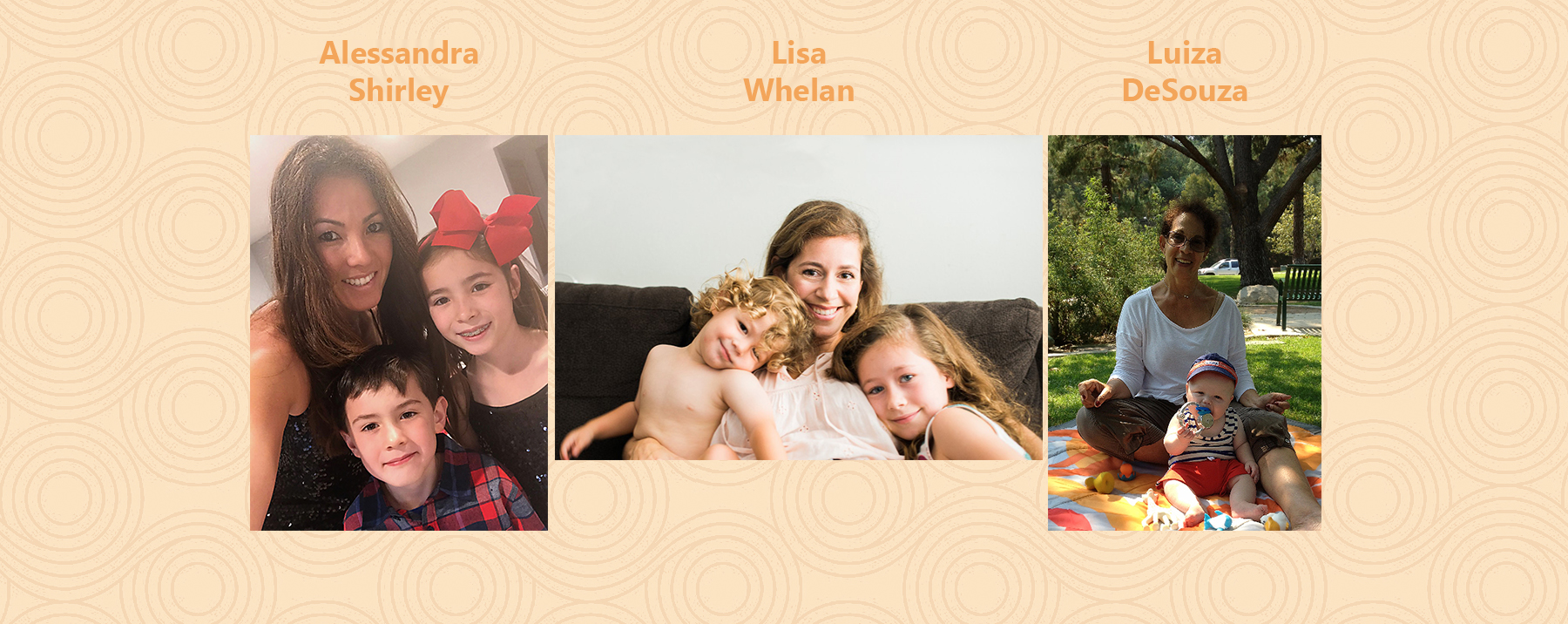

Luiza DeSouza

Lisa Whelan

Alessandra Shirley
Who We Are
Introduction-A-Word-to-Child-Provider
The Routines
Diaper Changes
Swaddling
Feedings
The Formation of the Bond
Feeding the Baby
General Information
Circumcision
The Bath
Bath
Touch and Emotional Side
Baby Products
Flat Heads
Visits to the Doctor
Jaundice
Security and Emergency
CPR
Final Test